


Surveying the wreckage of the 17 October riots, French President Emmanuel Macron was adamant: the protests were homegrown. “For me, there is no visible foreign interference in the events that took place,” he declared.
Pro-European advocacy group Alliance4Europe reached the same conclusion. It analysed half a million social media posts, across platforms and languages, to report that the protests were “French in origin and in grievance”.
And yet, both pointed to foreign efforts to shape the narrative around the unrest. Macron spoke of “manipulation of information afterwards” while Alliance4Europe’s report called out sophisticated attempts to “amplify and inflame public anger”.
The report presented the evidence: in the six weeks leading up to 17 October, a bot network attributed with high confidence to Russia’s Doppelganger operation posted 639 coordinated messages in French, German, English and Polish. These messages were seen roughly 7.4 million times.
“Every Euro for Kyiv is a Euro stolen from our common prosperity,” read one such post, linking problems in France to the country’s backing of Ukraine. The objective seems clear: to undermine French support for aid to Ukraine.
Making anger look organic
Speaking to Athena this week, Amil Khan, founder of UK company Valent, said Russia was out to exploit a tense situation.
“What we can see in France at the moment is exploitation rather than origination,” he said. “There are complex issues in France, real grievances. But the Russian activity will be in there looking to exploit the scenario.”
Khan, who monitors disinformation campaigns, explained how malign actors game algorithms using fake accounts.
“These [interconnected] accounts retweet, share, comment on each other, and they do it in this highly structured way, which tricks algorithms to push them on people’s feeds much more frequently than they would otherwise,” he said. “They make the platform think something is legitimately and organically popular when actually it’s not.”
Why the Kremlin thinks it’s winning
This activity shows what foreign operations try to achieve in countries like France, but not how effective they are. Distinguished Russia-watcher and Washington Post journalist, Catherine Belton, gave evidence last week to the UK House of Commons Foreign Affairs Committee, saying that Russia was satisfied with how effective its disinformation campaigns have been.
Belton said she’d seen intelligence materials on the role of Sergei Kiriyenko, the first deputy head of the Kremlin administration, and “his role in directing various political strategists in concocting a whole machinery of disinformation and seeking to undermine western support for Ukraine in France, Germany, Spain and the UK.”
Belton described this disinformation campaign as “almost the second front in Russia’s war against Ukraine”. She went on: “It’s almost as important as the military battle itself, because if you have undermined western support for Ukraine, then the battle is won. They have poured huge resources into this. It is so important for them.”
The journalist and author claimed those in the Kremlin “see that the winds are again changing and the disinformation campaigns that have been going on since the start of the [Ukraine] war are having an impact”.
When unity crumbles
Belton argued that Russia’s leaders see unrest in France and growing opposition to support for Ukraine from front runner Presidential candidate Marine Le Pen as signs that “unity in the west is now crumbling”. Disinformation campaigns help deepen those divisions, she added, while Moscow also takes advantage of Europe’s own political problems.
Once the French riots broke out, the Alliance4Europe report suggests that Russia changed its tactic: from stoking discontent amongst individuals in France to establishing their version of the narrative, especially for foreign audiences. Huge amounts of content about the French riots and unrest was published at lightning speed. Russia’s Pravda network produced 1,000 articles about the French riots, across 28 sites and in nine languages, the vast majority after the riots. Almost 300 stories were copied between sites, most of the copies within five minutes of the first.
Flood the web, shape the answer
The report suggests this tactic was meant to pollute the well of information from which AI models draw. The aim appears to be to weave a narrative of a society falling apart, for audiences in France and world wide. Speed was crucial. Rapid publication could increase the likelihood that searches and AI-generated answers to something simple like “what’s going on in France?” would draw on Russia-aligned accounts of the unrest.
According to the report: “This fits the aim of seeding search and AI models rather than reaching local readers”. Ultimately, amplifying a sense of chaos is designed to foster support for political extremes – left or right – who are more sceptical of the EU and less supportive of Ukraine than France’s centrist parties.
So what are defenders trying to do about this?
Khan’s company tracks inauthentic campaigns. An account posting messages every hour, on the hour, with no breaks (the kind a human would have to take to, say, sleep) is a common giveaway, says Khan. Khan’s team looks for about 50 such characteristics for each account. And they monitor patterns of how these accounts interact with each other to form a network.
Two can play that game
While threat actors are increasingly using AI to power their campaigns, the same technology is helping defenders. Khan calls this an arms race.
“In the past, you could still track an account and how it acts. And you could predict how it’ll act in the future because there are patterns,” he says. “But it was much harder to do. AI has made malign activity scalable – but it’s also made our ability to track it scalable.”
The solutions Khan points to start with the identification of inauthentic networks by companies like Valent. There are also other groups trying to track what is and isn’t authentic. Catherine Belton, in her evidence, cited an anonymous collective of volunteer analysts and researchers, Antibot4Navalny, which has effectively mapped bot networks and Russian disinformation campaigns. But to be effective, Khan believes they need to work together with the platforms.
For Khan, the strongest evidence lies in how accounts behave together: posting at regular intervals and repeatedly amplifying one another. Platforms can dispute whether a message is harmful; documented patterns of coordination are harder to dismiss.
“It’s clear coordination. That kind of activity should be stopped,” he said. Removing it protects genuine debate, rather than allowing “a ten percent viewpoint [to be] made to look like an 80% viewpoint”.
Connect the defenders
Khan also sees a role for government bodies such as France’s Viginum, which investigates foreign digital interference. Effective defence means connecting their work with that of detection companies and the platforms.
“It’s a multi-level problem, but all the capabilities do exist,” he said. “It’s just a case of bringing them together and acting on them.”
France will continue to battle foreign state interference. Credible claims of Russian-backed smear campaigns targeting centrist candidates in next year’s Presidential elections prompted the Paris Prosecutor’s Office to open an investigation in late August. They’re looking into deepfakes and false stories posted on social media.
Viginum is clear about where responsibility lies. It attributed one campaign, targeting centrist candidate and former Prime Minister Gabriel Attal “with a high degree of confidence” to the pro-Russian Matryoshka network. Attal has come out as a strong advocate for increased support for Ukraine, and has claimed Russia wants to “steal the Presidential election from the French people.”
The challenge is to stop manufactured outrage from passing for public opinion. Khan’s argument is that the tools already exist; the next step is getting those who can detect, investigate and disrupt these networks to work together.
Don’t take the bait. Search for “real signals”
In the fog of hybrid war, knowing what’s real can help governments de-escalate tense situations and avoid bloodshed. Amil Khan recalls an operation in Sudan, which was designed to provoke violence by convincing the authorities that protestors would be armed.
It was 2021, before Sudan’s current war, and Khan’s team was monitoring suspicious calls for protests against the civilian government. Some accounts were urging demonstrators to bring weapons and confront the government.
The authorities were worried and were preparing to mobilise special riot police units. But Khan’s team found that the accounts calling for violence and those responding were completely fake.
“It was just fake accounts talking to fake accounts to make them [government] overreact,” Khan recalls.
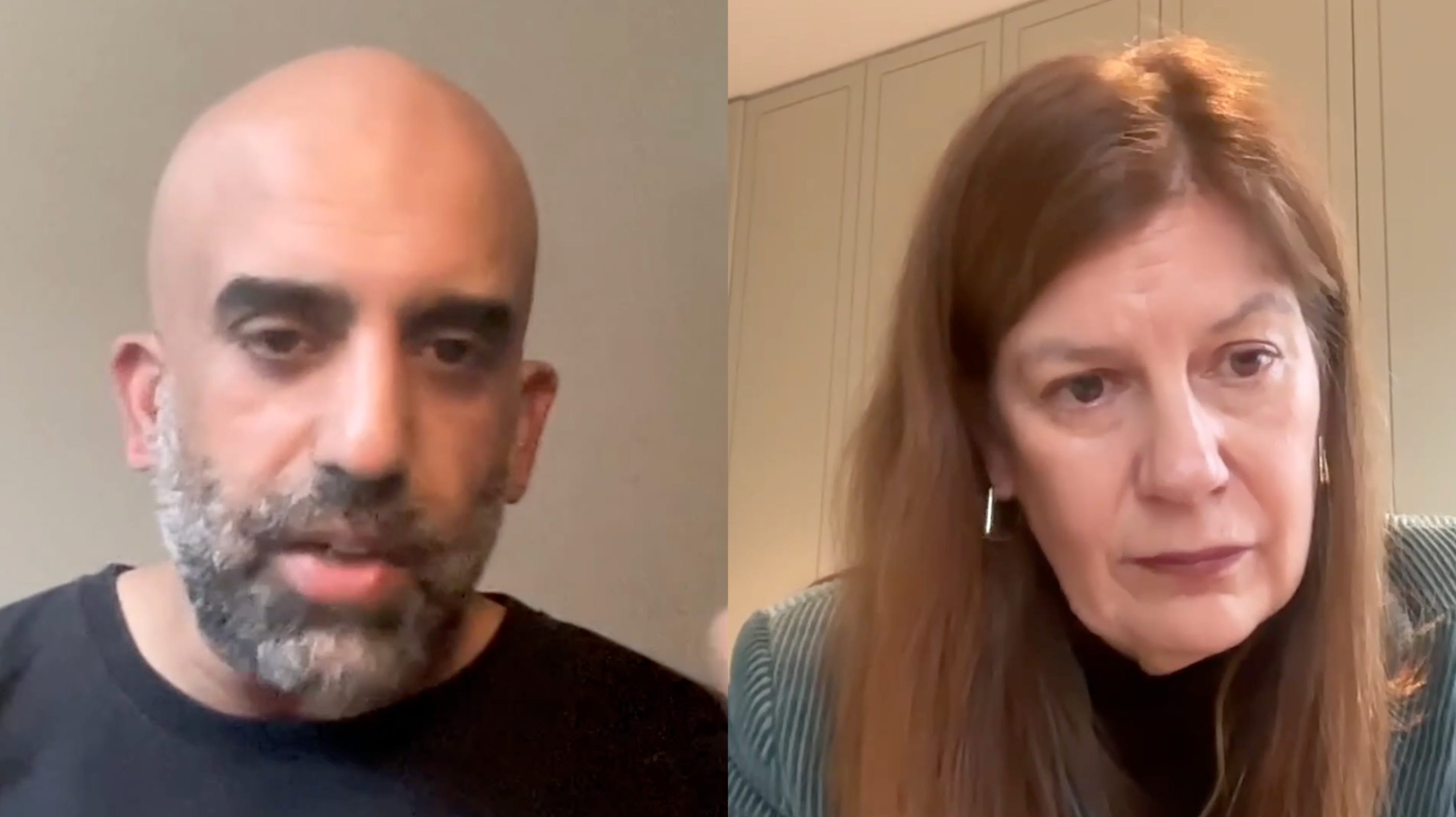
Khan was convinced there would be no vast armed crowd. Just several thousand peaceful protesters. Officials assessed this advice and made a call: stand down the armed police units.
In the end, about 3,000 people attended, Khan said. They protested and left without violence. Had blood been shed, Khan argues, the same networks could have used it to portray the civilian government as brutally repressive. A manufactured threat would have helped create a real event to fuel the next narrative.
The defence was finding the “real signal”: understanding the network well enough to avoid taking its bait.
More hands on the levers of interference
The tools of interference are reaching more hands, making it harder for defenders to know who they’re up against.
As AI accelerates and transforms the information war, more people can find targets, coordinate attacks and spread manufactured deception. States are left trying to figure out what battlefield advantages they still possess.
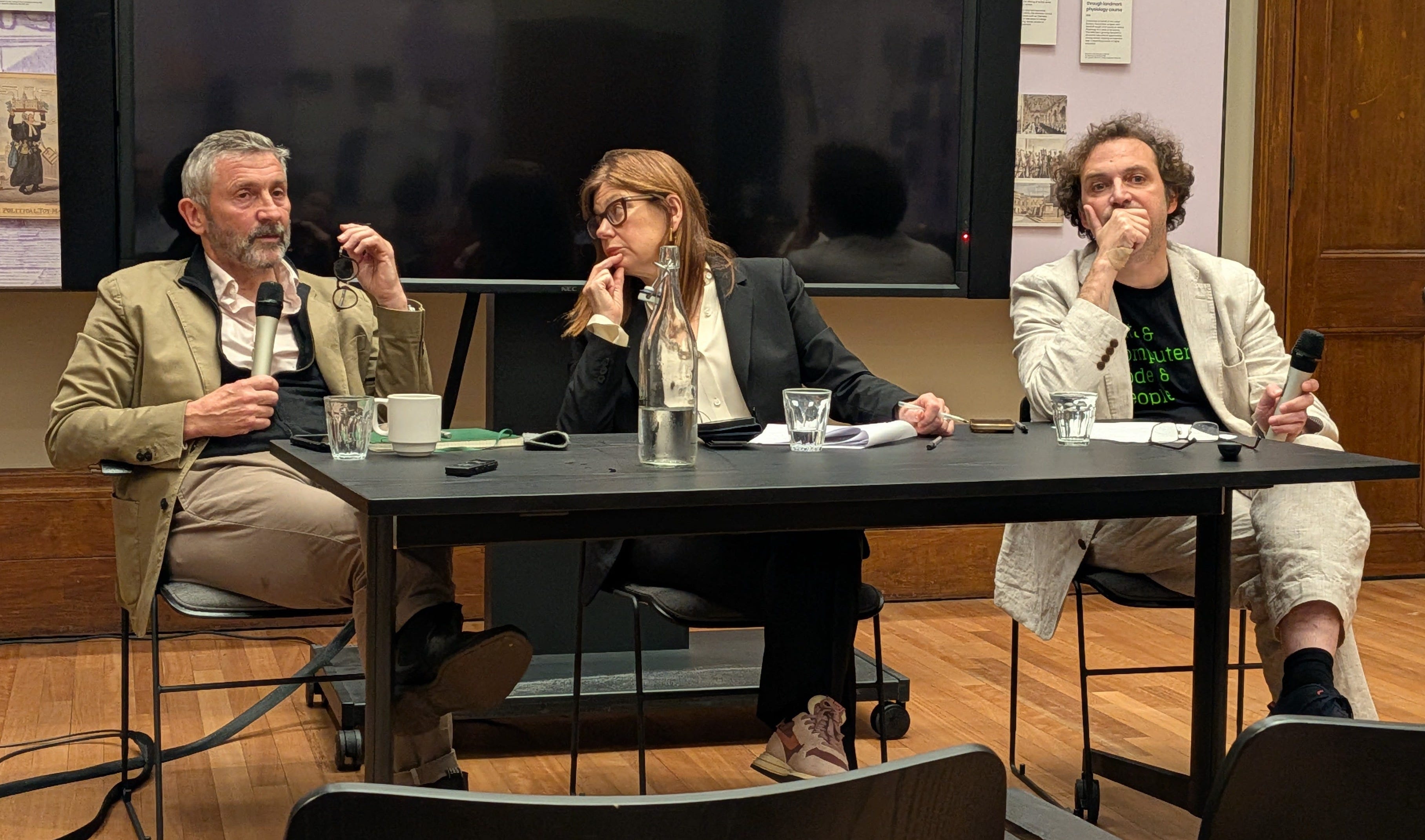
At last week’s Athena/UCL panel in London, we explored this question with Air Marshal Edward Stringer, a former director of Military Operations at the MOD, and UCL’s Professor of Computational Science, James Hetherington. We unpacked how wider access to tools of interference is changing the task of defending against them.
This is the dangerous edge of democratising disinformation - an asymmetry where widely available interference tools are cheap and easy to use, while defenders scramble to keep up with evolving technology.
Alongside this widening access to technology, online recruitment networks allow hostile actors to enlist people to carry out physical attacks. A Norwegian teenager was sentenced this month for a paid murder plot commissioned by a criminal network linked to Iran. Police investigated a possible Iranian connection to the arson attack on four Jewish community ambulances in London.
These activities have different motives and degrees of established attribution. But they illustrate how recruitment networks and accessible technology can put harmful capabilities into a growing number of hands.
Finding signals in the noise
Stringer said states can still combine cyber operations, special forces and military force - capabilities that remain beyond many adversaries’ reach. But, he argued, their advantage in finding and identifying targets is narrowing.
“People can now join dots and get signals where there was previously only noise,” he said.
Accessible data and analytical tools allow non-state actors to uncover things that once required substantial intelligence resources. Stringer pointed to fitness-app activity revealing where military personnel operate. Ordinary digital traces can become intelligence when someone knows how to connect them.
Tools that watch, act and adapt
Hetherington, meanwhile, explained how AI can extend that capability into action. An AI agent can publish content, observe the response and adjust its next message.
“They’re making the tweets and they are reading how those are affecting the world,” he said.
The picture becomes more complex when multiple agents work together, each with its own instructions and behaviours. The potential extends beyond producing false content to coordinating activity and adapting it to an audience.
The same technology that helps researchers expose an operation can help an adversary identify vulnerabilities and exploit them. Defenders need to prepare for a wider range of opponents, including those who can buy, borrow or automate capabilities they could never have built alone.
News: what changed this week
BBC launches new research initiative. Its Global Signals study examined two datasets from 2026: more than 100,000 posts from known disinformation accounts and over 54,000 posts mentioning the BBC in Russian and Arabic.
How does the BBC influence the global information environment, based on this pilot study? The research suggests in three ways: it directs audience attention; it shapes interpretation of the news, providing important context; and it acts as a trusted authority in settling factual disputes online.
Read the full Global Signals report
Fabricated assault claims target US midterms. NewsGuard uncovered a fake TV report accusing Ohio Senate candidate Sherrod Brown of sexual assault. The video dubbed false audio over genuine local news footage. NewsGuard assessed that it appears to be the work of Russian influence operation Storm-1516.
Read NewsGuard’s investigation
OpenAI sets up an election “war room”. Politico reports that the company is establishing an Election Operations Center ahead of the US midterm elections to identify misinformation and attempts to disrupt the vote. Its focus is largely on combating misuse of OpenAI’s own tools, including ChatGPT, by monitoring events in real time and reviewing reports of unexpected model behaviour or suspected breaches of its platform terms.
Coordinated accounts targeted Serbia’s independent media. Researchers identified 332 coordinated inauthentic accounts generating more than 39,000 messages in 12 days ahead of Sunday’s election. The Balkan Free Media Initiative and Clemson University found that the network amplified support for Aleksandar Vučić while flooding independent outlets with hostile replies. Despite X suspending about a fifth of the accounts, researchers said the network’s core remained largely intact. Vučić went on to lose Serbia’s election.
Solutions:
Valent, founded by Amil Khan, tracks social media accounts and narratives to identify suspicious patterns of amplification. The company helps organisations distinguish coordinated manipulation from genuine public conversation and anticipate how a campaign might develop. Understanding the real threat can help decision-makers respond.
Viginum is France’s government service for detecting and characterising foreign digital interference. Its investigations expose the accounts, infrastructure and methods behind deceptive content. For defenders, its public reports help turn apparently isolated falsehoods into a clearer picture of coordinated campaigns.
Alliance4Europe’s Counter Disinformation Network brings researchers, journalists, fact-checkers and civil society organisations together to investigate information manipulation and coordinate responses. It shares evidence with platforms, governments and European institutions, helping bridge the gap between identifying an operation and getting those able to intervene to act.
Antibot4Navalny, an anonymous research collective, tracks Russian bot activity and influence operations. Its findings helped expose Matryoshka, providing groundwork for subsequent investigations by other researchers. That kind of sustained monitoring helps defenders recognise recurring tactics and assess claims about whether an operation has actually been disrupted. Check First’s Operation Overload investigation documents the collective’s contribution.