

This week, we asked Jonathan Black, the UK’s former Deputy National Security Adviser, to imagine he were still in government. What would be keeping him up at night? His answer: how quickly technology is advancing, and how much easier it’s becoming to use it to spread disinformation.
Jonathan spent years on the frontline of the global information war, advising successive Prime Ministers on major security and policy challenges. He represented the UK government at G7 and G20 gatherings, and at the Bletchley Park AI Safety Summit.
For us, Jonathan’s unique perspective made three things about Athena’s mission clear:
Mapping the fast-moving information war is increasingly urgent. It can’t wait.
Finding solutions means looking beyond frontier AI headlines.
Technology moves faster than standards and regulation, and must play a central role in our defences right now.
“Those who want to spread disinformation or cause trouble are able to use that technology so much more easily,” explained Jonathan. “And it’s that pace question, which is the thing that, if I was still in government, I would be worrying about most.”
Rapid change is disorientating
Focusing on specifics is difficult when headline after headline highlights the existential risks of the latest AI advances.
“We’re very focused on some of these existential risks. Rightly so. If they materialise, they’re incredibly serious… but there is a very, very long tail into the real economy and into real society,” Jonathan adds. His point: we need to tackle the harms already affecting people and businesses. They may not threaten humanity’s survival, but they can be existential for the person or company facing them.
Prime Minister Andy Burnham discussed these harms in his first major international address at the UN General Assembly in New York. Announcing a new UK centre to fight a “poisonous tide” of disinformation, he warned that attackers were creating fake websites, distributing false news stories, and impersonating trusted brands like the BBC.
Jonathan worries that focusing on the “top 1 per cent” means we risk overlooking the “remaining 99”. In other words, the sharp tip of the iceberg commands our attention. The challenge then is: how do we address the harms beneath the surface?
Athena’s approach is to zoom in and get specific.
We want to shift the conversation from a broad, often abstract threat and focus instead on distinct areas where new defences are either emerging or are desperately needed.
Our job is to follow the “long tail” into four interconnected threat areas:
Influence operations: from election interference to military cognitive warfare. Or as the PM puts it: “an insidious campaign that reaches into people’s homes and twists what they feel”.
Impersonation and fraud: deepfakes, identity theft, fake websites and fabricated news articles.
Narrative and reputation attacks: market manipulation or smear campaigns against individuals, brands or companies.
Information supply chain: attacks on the information infrastructure we rely on.
These threats often overlap. Just this week, we read about AI agents running fake social media accounts in an attempt to influence public opinion (see News section). But if we’re going to make a difference, then we need to direct our focus and explore specific solutions like detection or watermarking.
Turning technology towards solutions
We’ve met many exciting startups, academics, researchers, investors, non-profits, and media companies building defences against these attacks. We’ve identified hundreds more that we can’t wait to meet.
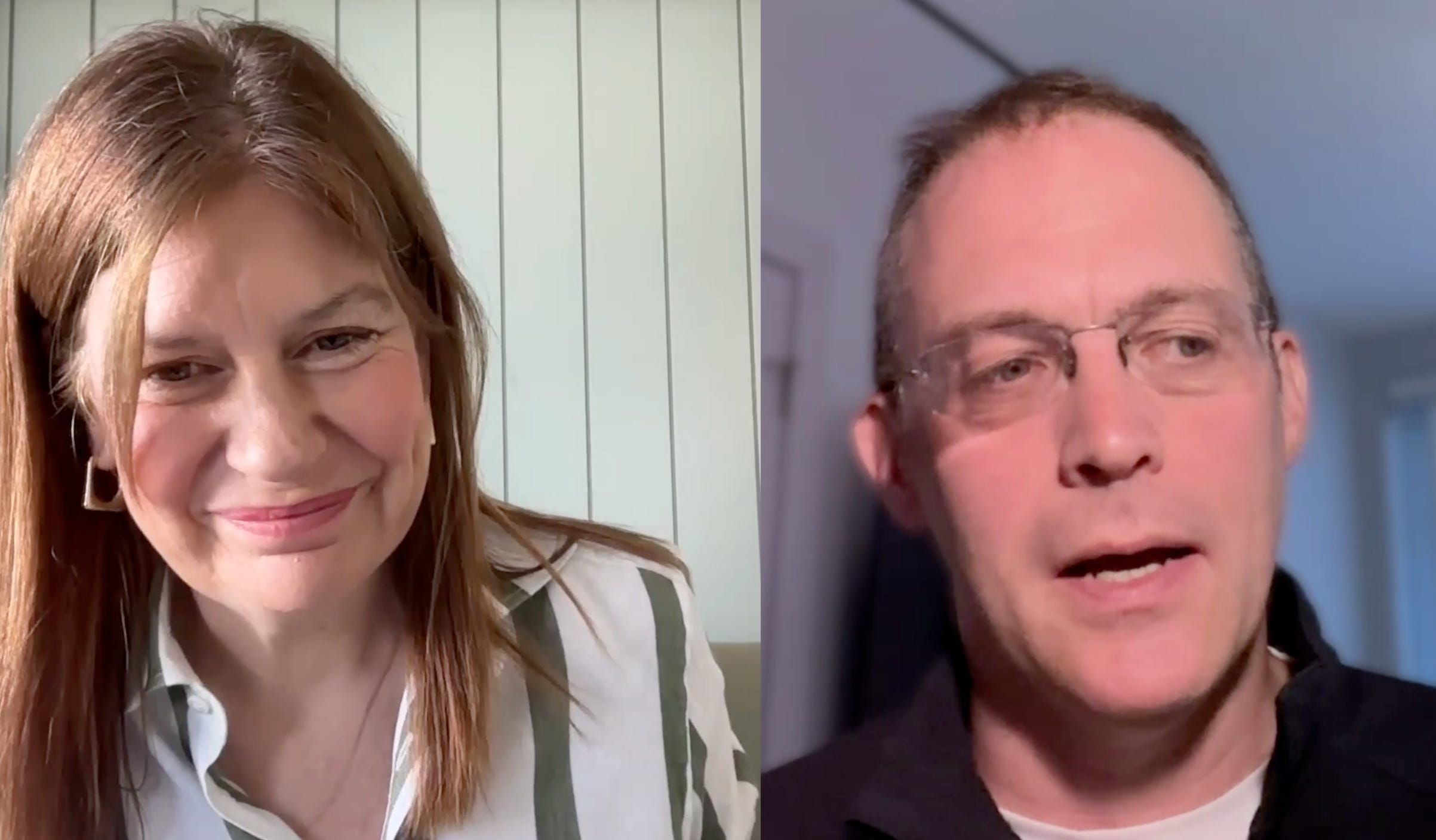
Jonathan calls himself a tech optimist. He believes there’s potential for international cooperation on technical standards, and that technology can be part of the answer to the problems it creates. For startups, he sees some of the most promising opportunities in harnessing the technology that exposes us to risk and turning it around to protect us from harm.
We share that optimism. From next week, we begin our deep dives to map out the four key threat areas.
High trust, hidden weaknesses: lessons from the Nordics
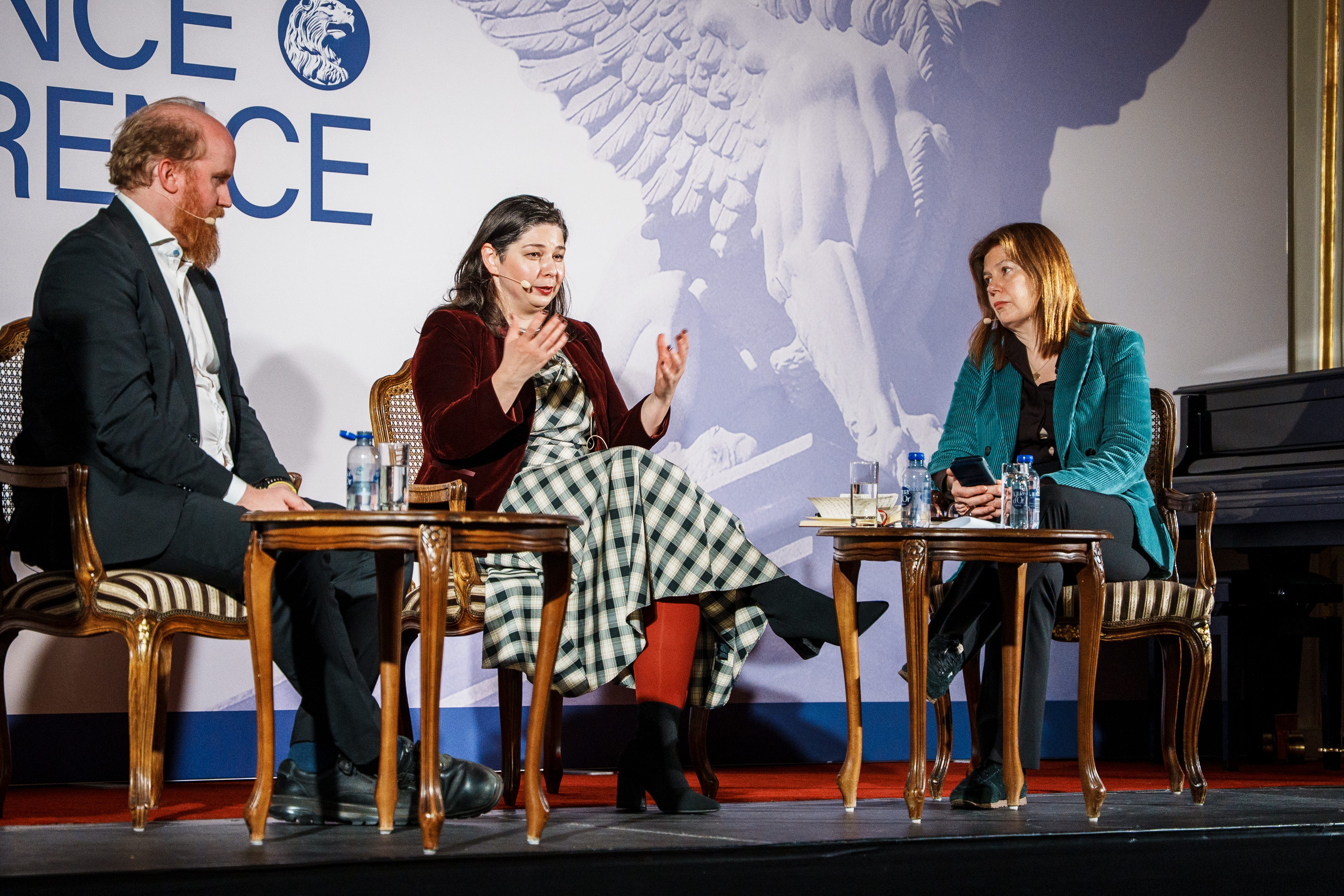
What can the rest of the world learn from the Nordics about defending democratic elections? Athena brought together two Norwegian founders tackling threats to information integrity. We explored the strengths of a region built on trust, independent journalism and strong institutions, but also the vulnerabilities those strengths can conceal. The event was held at a Resilience Conference in Copenhagen.
In their words:
“Trust is also something that can be weaponised against us.”
Bjørn Ihler, founder and CEO of Revontulet, an independent threat assessment firm, warned that attackers can impersonate trusted news outlets and use social platforms to spread their messages, exploiting the confidence people place in familiar, trusted sources of information. He also warned about the danger of over-relying on any single platform.
“They’re pushing this issue from one department to another.”
Maria Amelie, co-founder and CEO of Factiverse, which builds AI tools to detect disinformation, says responsibility for tackling the problem gets passed between government departments (including electoral bodies), while concerns about censorship make officials reluctant to engage. Framing the threat as foreign influence, she argued, can lead to a stronger response.
“The Nordics sometimes lack a sense of urgency.”
Bjørn challenged governments and investors to make better use of startups, whose speed and ability to build partnerships can strengthen defences.
“They can build tech in the US, but we can fix it.”
Maria described how Factiverse is exploring whether trusted information gathered with journalists and fact-checkers can improve LLM accuracy.
Lessons from the Nordics:
Build resilience, defend trust: Invest in independent media and education, while recognising that attackers can exploit trusted institutions and social platforms. Protect privacy and free expression as defences evolve.
Work together, all year round: Information attacks continue between elections. Give government clear responsibility and strengthen cooperation across borders between startups, researchers and media.
Match the threat’s pace: Give startups the funding and access to move faster. Put trusted journalism and fact-checking to work in technologies that detect manipulation and improve AI accuracy.
Watch the event here
News: what’s changed this week?
The troll farm is starting to operate itself. Iran and China have tested AI agents that create fake accounts and coordinate propaganda, the NYT reported. Automating the operation makes detecting coordinated behaviour as important as spotting false content.
An AI error reportedly put military aircraft in the air. CNN reported that inaccurate intelligence assembled by AI nearly triggered a US operation against a Chinese vessel. An information failure rather than deliberate disinformation - but a warning about what adversaries could exploit in future.
[Read CNN]
Britain plans a national centre for information defence. A proposed centre would detect and disrupt hostile state influence operations, alongside a push for global AI standards. Citing the work of the National Cyber Security Centre, Jonathan Black says the UK has a good record of using technology as a response.
Solutions:
Revontulet maps the connections between state actors, organised crime and extremist networks, including how they use information to sow division. This helps defenders understand who is behind a threat and how it operates beyond a single campaign or election.
Factiverse identifies claims and checks them against sources - in news, video, audio and AI output. It helps journalists and organisations bring verification to the places where unreliable information enters the system.
Resilience Media covers defence and security startups and connects founders with investors and government. Its journalism and events help build the connections between promising ideas, potential backers, and those who need new defences.
Athena’s Jessica Cecil will lead a panel at the Resilience Conference on 5 - 6 October 2026. The session will explore where the new opportunities are to invest in stronger defences against disinformation. Hope to see you there.