

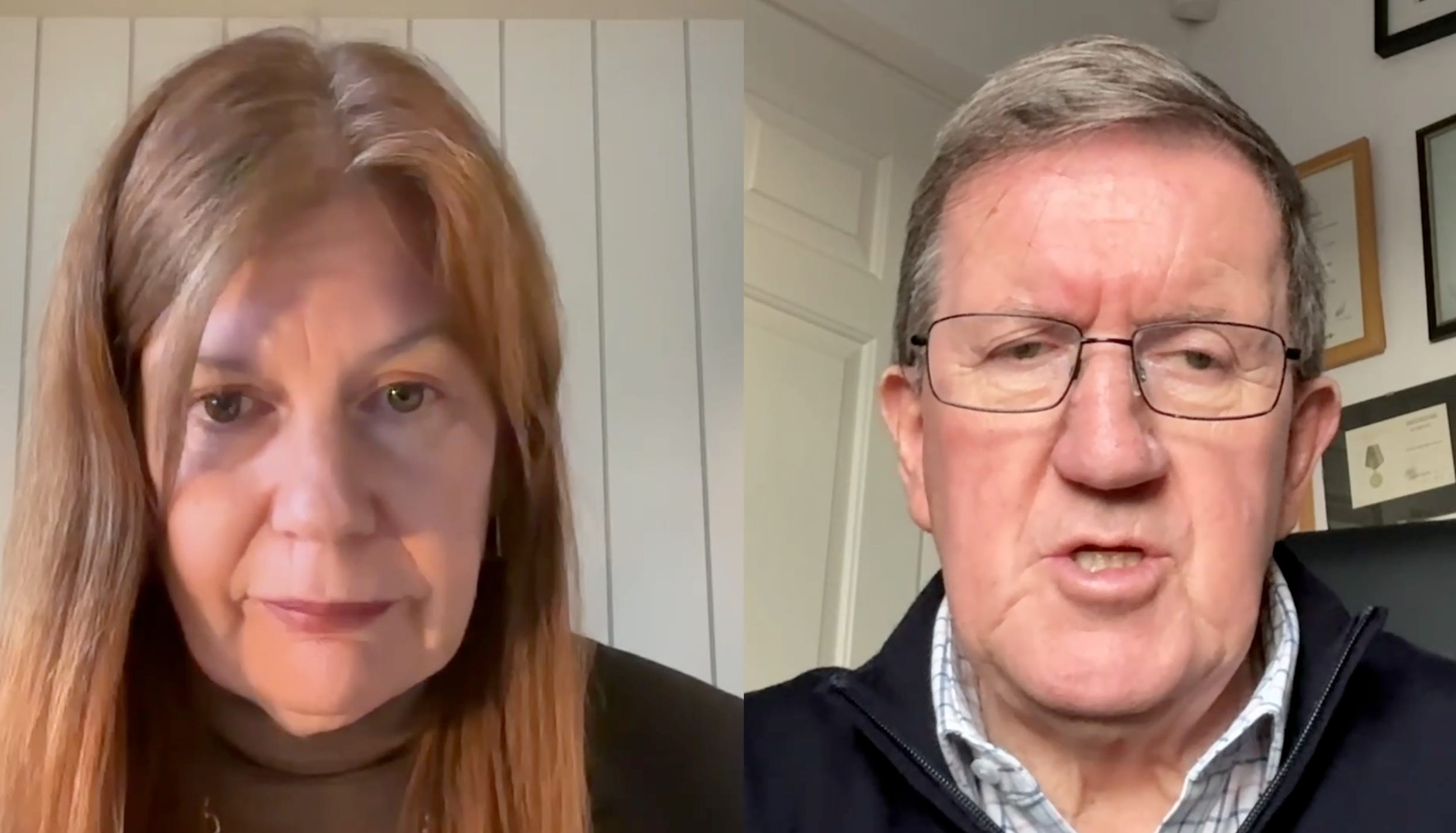
The UK must rehearse its response to disinformation attacks and election interference, former NATO Secretary General Lord Robertson has told Athena, warning the country has slipped back into “wishful thinking and complacency”.
Lead author of Britain’s 2025 Strategic Defence Review (SDR) says the national conversation their report called for – part of a whole-of-society approach to counter escalating global threats – is yet to happen.
Speaking to Athena’s Jessica Cecil this week, Lord Robertson argued that, in the short term, the UK was likely to face “grey zone” attacks, which include disinformation, electoral meddling, and sabotage.
“All of these things are happening, and I think they’re going to escalate because our adversaries know how weak we are. They know how vulnerable we are. They are pressing on the bruises of our democratic society.”
Lord Robertson says information warfare has grown into a more urgent threat since the SDR was published, and the warnings it delivered are starting to come true. He welcomed plans for the UK’s new National Centre for Information Defence (see interview below), expressing hope it will have the power and resources it needs.
“The necessity is certainly there. It’s being proved on a daily basis.”
The cost of complacency
The SDR called for extensive public outreach, urging government to explain the threats the UK faces. Lord Robertson says this conversation must be led from the top, by the Prime Minister, and should involve all relevant government departments. Only then can government machinery be galvanised to deliver clear warnings and help communities and businesses understand their role in keeping the country safe.
The private sector, Lord Robertson maintains, has a key role to play in countering threats. Companies operate much of the critical infrastructure the country depends on, including water, telecoms, gas, electricity and data networks. He believes they are not sufficiently aware of the dangers and vulnerabilities that can be exploited.
“I worry that maybe we need a 9/11 moment in order to alert the population to how serious the situation actually is. When the lights go out and the data centres melt because of a lack of air conditioning, the traffic lights go out, and electronic banking disappears, at that point, people are going to know very vividly what it’s about,” says Lord Robertson. “I hope that we can avoid waiting for disaster to happen before we take remedial action.”
Disinformation war games
So, what does pre-emptive action look like? Scenario planning and exercises to practise emergency responses. Routine exercises, Lord Robertson adds, should be done by individual companies, by the state, and as joint “war games” at national and local levels, similar to those run by the military. The aim is to find vulnerabilities and close the loopholes before threat actors exploit them.
And while the threats of ATMs shutting down or data centres going dark are easy to imagine, Lord Robertson says exercising should also apply to threats like election interference.
“Across Europe there are going to be decisive elections this coming year, and I hope that every country is going to be aware of the fact that they are vulnerable. And in this country, we should be doing that [response exercises] as well.”
Stronger together
Preparing for these threats means working with allies. Despite the “radical and in many ways frightening” turbulence at the top of the US government, Lord Robertson says day-to-day cooperation continues.
“At lower levels, that cooperation is ongoing and is still very, very substantial.”
Lord Robertson hopes the UK can keep building its ties with European partners to strengthen defences. But, he says, to fight disinformation and other threats, “government-to-government cooperation is going to have to be much more intense than it has been up to now.”
3 takeaways from Lord Robertson interview:
Rehearse the information war: We need to test (at all levels) who does what when disinformation hits, just like we practise responding to a military emergency.
Bring businesses into the room: Much of our national vulnerability sits in privately run infrastructure.
Make the warning useful: A national conversation must give people a role in defending the country, not simply tell them how much danger they face.
“Stop gawping at the machine god”: former NCSC boss on fighting disinformation
The UK’s former cyber security chief, Professor Ciaran Martin, says he’s ready to cheer on the work of a new national centre being set up to fight disinformation. But he warns it won’t be easy, nor controversy-free.
Martin, who led the UK’s National Cyber Security Centre (NCSC) and now teaches at the University of Oxford’s Blavatnik School of Government, told Athena the centre’s success will take more than competence and performance. It will be navigating a more contested political space, walking a fine line between defending a nation from those who want to “mess around with your democracy” and being accused of policing information.
Last week, Prime Minister Andy Burnham unveiled a new National Centre for Information Defence. Burnham said the centre will help stem a “poisonous tide” of disinformation and stop an “industrial-scale assault by hostile actors on the information environment in the UK”.
A template for success
Martin says he’s impressed that the centre’s mission is to “detect, attribute and disrupt” information attacks. It’s the most legitimate space for the state to operate in, he adds, and “about as far removed from the arguments about free speech as it’s possible to be”.
One of the centre’s challenges will be to fight what Martin calls “micro aggressive campaigns”, where small amounts of fake information are spread on social platforms and amplified. These are harder to detect and may involve domestic as well as foreign actors.
But, Martin adds, the centre does have a template for success. He points to the work done in the US to identify and “hack” Russia’s Internet Research Agency (IRA), making it “much harder for them to operate”. The UK government labelled the IRA an “infamous bot-farm”, while the US Treasury Department sanctioned it for interfering with American elections.
“I don’t think the new centre will be able to solve all of these problems either strategically or operationally. But if it can get a few Internet Research Agency-style hits, and some of the big troll farms operated by our foreign adversaries, then I’ll be cheering it on.”
Don’t surrender the discourse
What about AI’s role in supercharging global disinformation?
Martin says he’s been reading a book (Prophecy, by Carissa Véliz) that’s examined prophecies over thousands of years, showing them to be mostly inaccurate. As he sees it, we should be treating AI not as a “machine god” but as a powerful technology with lots of flaws.
“We need to have a broader, more involved discussion with experts, society as a whole, about how we’re adapting to this,” says Martin. “[We need to] stop gawping at the machine god and buying these prophecies [that AI] is going to take all our jobs, it’s going to hack everything, it’s going to cure all disease. It might do some, none, or all of these things at different paces, and how that plays out is down to us.”
If you’re new here…
Welcome to Athena. We’re a new publication that helps you know where the information war is heading. We map out the disinformation terrain, and offer insight into emerging defence solutions and innovation opportunities.
Athena is led by Jessica Cecil, who worked as Chief of Staff to four BBC Directors-General and launched the Trusted News Initiative. You can read more about our mission here.
Please subscribe, and share this post with your network.
World News Day 2026: The BBC’s role in fighting disinformation
As we mark World News Day this week, there are calls for the BBC to be given a formal duty to counter misinformation and disinformation.
In a report published today, UK MPs recommend giving the BBC that explicit responsibility, provided it has the resources it needs. They also call for legislation to give “trustworthy news” greater prominence on social media.
It’s a timely reminder that independent journalism is a critical part of our defences.
“If journalism and independent truth were so truly irrelevant, so very much dead, why would so much money, political energy and fury be spent trying to bury it?”
That’s the question posed by Project Kontinuum founder, Branko Brkic, and Tina Brown, editor, author and founder of Truth Tellers in their World News Day op-ed.
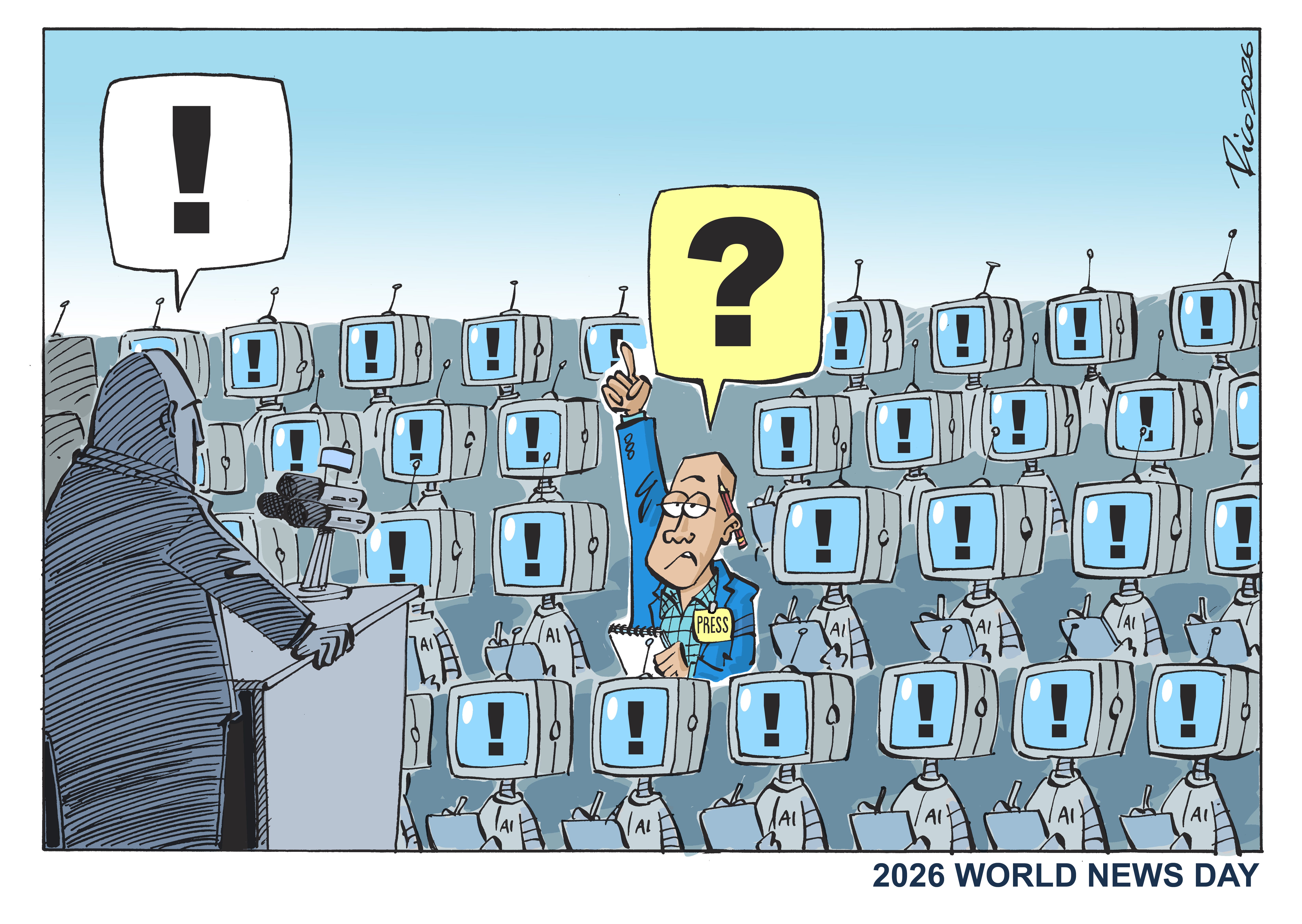
“This friction is only starting and will likely cause huge conflicts and suffering. The battlefield on which much of this struggle is being fought is the information environment itself,” they write. “The very people declaring journalism dead/irrelevant understand something that parts of our own industry often forget: Information is the most powerful technology ever invented by our human race.”
Read their full World News Day op-ed.
Explore the Digital, Culture, Media and Sport Committee’s BBC Royal Charter Review.

News: what’s changed this week?
Ukraine is getting AI tools to protect essential services from cyberattacks. OpenAI will give Ukrainian defenders access to its AI cyber defence system Daybreak to find software vulnerabilities and test fixes faster. It’s a practical example of the cooperation Lord Robertson calls for: government and technology companies working together to protect civilian infrastructure.
A fake message and a cloned voice reportedly unlocked €95 million. Fraudsters impersonated a bank chief and a lawyer to trick an Italian bank into transferring money, Reuters reported. While much of the money was recovered, it brings Ciaran Martin’s point home: we need ways to verify who’s speaking when voices can be faked.
AI is becoming standard equipment for foreign influence operations. A Brennan Center review finds AI is making deceptive content cheaper, faster and more convincing. With autonomous campaigns already reported, we’re watching how far agents take over the work of running influence operations targeting the US midterms.
Solutions: “Make truth pay”
Professor Ciaran Martin says startup innovation and capital has a “huge role to play” in fighting disinformation.
“I’d be trying to get a lot of people who want to do the right thing, and get a return on their investment, to find ways of making truth pay,” says Martin. Doing this will strengthen society and ease the pressure on government to verify truth, which can lead to “difficult and sometimes dark places”.
Where should startups and investors look? Martin points to several opportunities:
Watermarking and provenance: Martin says it should become commonplace to establish whether an image is original, altered by AI or entirely AI-generated. Could we make it easier to check a source’s funding and leanings?
Explore the work of the Coalition for Content Provenance and Authenticity (C2PA).
Voice cloning: This is “a very clear example of where attack has got ahead of defence”. Making a voice clone is now easy. Martin sees an opportunity for tools that help establish whether a recording is genuine or make it trivial for people to authenticate their voice.
Companies like Reality Defender are aiming to help unmask deepfakes.Image protection: Some startups are already exploring ways to make images harder to distort, or make it more obvious when they’ve been manipulated.
Explore IMATAG, a company whose invisible watermarks help trace images back to their source and expose alterations. AFP has tested the technology.
Critical thinking: Martin points to Finland’s approach to teaching critical thinking in primary schools, and argues that social resilience matters (seeing disinformation as an attack on the integrity of your society).
Finnish organisations like Faktabaari are producing useful school guides on AI to encourage digital literacy and critical thinking.
Drawing on a point made by former MI6 chief, the late Sir Alex Younger, Martin says the difference between disinformation and other hostile activity is that “how you react to it is probably the most important thing”.