


We hear it from every expert we speak to: companies face a growing threat of AI-supercharged disinformation campaigns.
These attacks can damage reputations, sink share prices, or even end up in physical office invasions (see articles below). Launching them doesn’t take much more than a small budget and publicly available AI tools.
And yet, it seems businesses haven’t woken up fully to the reality - and cost - of the dangers posed by disinformation. Some don’t know where to start. Or aren’t sure what role regulation should play.
This week, we deep-dive into how companies can prepare to fight disinformation attacks, presenting practical steps you can take now. By next year, as one of our guests tells us, disinformation defence must “become a clear, actionable item” for business leaders, boards and exec teams.
Like it or not, you’re in the firing line
That’s Thomas Barton’s message to companies facing AI-powered disinformation attacks.
The founder and Executive Director of the Council for Countering Online Disinformation (CCOD) says businesses must step up to meet the evolving threat, and think creatively about what role they can play in a whole-of-society defence.
“The reality is that the wider business community hasn’t sufficiently woken up to the scale of the challenge,” Barton told Athena this week. “But they shouldn’t face these threats alone.”
He called on government to support private sector efforts through regulation and funding, especially when it comes to innovative startups looking for a market and critical national infrastructure (CNI) companies under threat from foreign states.
From the fringes to the frontline
A similar call came from the House of Lords Resilience Committee last week. The committee published a report urging for the private sector to be brought in from “the fringes” and for companies to be “embedded in resilience planning and systems”.
Barton says those on the fringes could soon find themselves in the crosshairs. In 2024, a British engineering firm employee fell for a deepfake scam that cost his company $25 million. Three men currently face charges in the US over an AI impersonation scheme that defrauded businesses, including a UK one, of nearly $130 million.
Barton warns that a disgruntled former employee with a chatbot and a small advertising budget can now launch a campaign to damage a company’s reputation.
The cost of waiting
Measuring how much disinformation costs global business is notoriously difficult, Barton explains. Industry estimates tend to predate the AI explosion - which makes disinformation campaigns cheaper and easier to run - while companies are often reluctant to disclose losses. The impact ripples flow from direct losses to indirect ones, which can be impossible to measure.
Barton says companies can take proactive steps to defend against disinformation. The first step is making sure there’s someone right at the top - at the exec team or board level - who owns the risk and stands accountable. From there, it’s about making the entire organisation, not just management, understand the risks.
“We really need an entire organisation to understand that disinformation is a threat,” he says. “Workforces, especially in CNI companies, need to receive media literacy training.”
This month, PwC in the US announced it will spend up to $100 million delivering critical thinking training to more than 85,000 employees and partners. This training, the firm said, is designed to help workers “develop sound judgment” as AI is integrated into workflows.
Barton believes investing in the right technology is also important, as is building a trusted network that can help you set the record straight or distribute counter-narratives. Companies should be lobbying government, he adds.
”If you’re a big business, CNI or otherwise, and you have public affairs and public policy teams, you should be engaging with government proactively on how a policy response can be developed to mitigate the disinformation risk.”
SIM cards and smart ideas
Being a “socially responsible business actor”, as Barton calls it, also means thinking about the bigger national security picture. He offers a specific example: a UK telecoms company might see a bulk SIM-card sale as ordinary business. But Barton asks what those cards are being used for. Phone numbers verify accounts on social media, which can help threat operators build the bot networks that amplify false narratives. If the company carries out stronger checks on who’s buying large quantities of SIM cards, he argues, it could disrupt that disinformation supply chain.
“We need a whole-of-society approach,” he says. “And that means companies doing their bit to disrupt the architecture that these bad faith actors weaponise against us.”
Barton sees parallels with cybersecurity, where businesses often waited until attacks exposed their weaknesses before investing in protection. He fears the same pattern will repeat with disinformation.
What should government do to support the information defence ecosystem? Barton sees four places to start:
Open up government procurement. Give smaller companies developing innovative counter-disinformation tools more opportunities to supply government departments and agencies.
Help build the market. Create a government fund for startups tackling disinformation, helping them bridge the gap until more businesses are ready to buy their services.
The NCID should support business. Barton says the new National Centre for Information Defence could help companies build their capacity to respond to disinformation.
Strengthen the rules. Barton suggests expanding the Cyber Security and Resilience Bill to require critical infrastructure companies to protect themselves against information attacks, alongside measures to disrupt the networks behind campaigns.
Barton fears businesses will wait for a major attack to force their hand. Government can help them prepare, but companies have a choice to make now. Will they wake up to the threat?
Follow CCOD’s excellent weekly newsletter.
The ‘unseen hand’ targeting your business
If your company is hit by a disinformation campaign and you’re asking, “who’s in charge of defending against this?”, it’s too late.
Preparation is key, says Peter Munford, a national security expert and co-founder of Vantix Partners consultancy.
Munford says disinformation threats are gaining traction as AI advances, becoming ever more capable and available. Fighting these threats is the “greatest challenge of our age”. What used to be the work of powerful states or companies with large marketing departments, he explains, is now in the “unseen hand” of anyone with access to basic AI tools.
And attacks are getting increasingly more difficult to detect, as they evolve from a “static push of information” (a social media post) to conversations run by AI agents and their bot armies.
Real damage
What do these disinformation attacks look like in the real world?
Munford has worked with a company that was targeted for its green energy portfolio. An online campaign orchestrated by pro-fossil fuel adversaries ended with a protest outside the company’s offices and an invasion of its offices.
In another case, a company’s executives were targeted and found their home addresses published online (a doxxing campaign). Another client working in Africa was falsely accused of financial wrongdoing and suffered a major blow to its share price. The campaign spread from WhatsApp messages to a fabricated news website and, eventually, to mainstream media and an industry regulator.
Measuring the damage disinformation causes is difficult, Munford says, echoing Thomas Barton. He says the costs need to include the price of fighting the manipulation campaigns, lost opportunities (especially for companies relying on trust in contested geographies), and the negative impact the attacks have on strategic decision making.
Munford says UK businesses are not doing enough yet to prepare.
“We need to move faster on this than we moved on cybersecurity. We’ve got to be quicker than that,” he says. “In 2027, this needs to become a clear, actionable item for boards and executive teams.”
Act before it’s too late
Munford’s advice to companies taking their first steps comes down to five decisions:
Figure out who owns the risk. Put disinformation on the risk register and make someone at executive level responsible and accountable. It cuts across communications, cybersecurity and geopolitics, so someone needs the authority to bring those teams together.
Know what’s worth defending. You can’t chase every online lie about your business. Munford calls the claims that matter your “narrative critical ground”. (Someone saying your product is rubbish may need little attention. A false allegation about criminal activity probably demands a response.)
Match resources to exposure. A small manufacturer with one established client may face a different risk from a pharmaceutical company selling products that depend on public trust. Work out where a false narrative could hurt the business and resource the defence.
Make sure you can spot it. A coordinated campaign may evade ordinary media monitoring. Munford says specialist detection services can help identify disinformation activity.
Use your staff’s eyes and ears. Employees encounter stories about their employer in their own feeds. Make it easy and safe for them to flag them.
“Your staff go from being a vulnerability to a radar screen,” Munford says. Building that early warning system takes trust, clear communication and a culture where people feel confident speaking up.
Sharing is defending
Munford also wants companies to find safe ways to talk to each other about attacks. Which claims spread? Who was behind them? What helped contain the damage? Sharing experiences through trusted industry groups can help other businesses recognise the threat and prepare.
There may also be a wider return on training staff. People who learn to spot manipulation at work take those skills home, applying them to the stories that reach their families and communities. Compulsory business training can help build national resilience.
“Give people the tools so they can be their own detectives,” Munford says.
Listen to Munford’s advice to businesses:
New leadership skill: knowing what to believe
This week, Athena is exploring how businesses prepare to defend themselves against AI-supercharged disinformation. Knowing what to believe, and what to safely ignore, is a big part of that preparation.
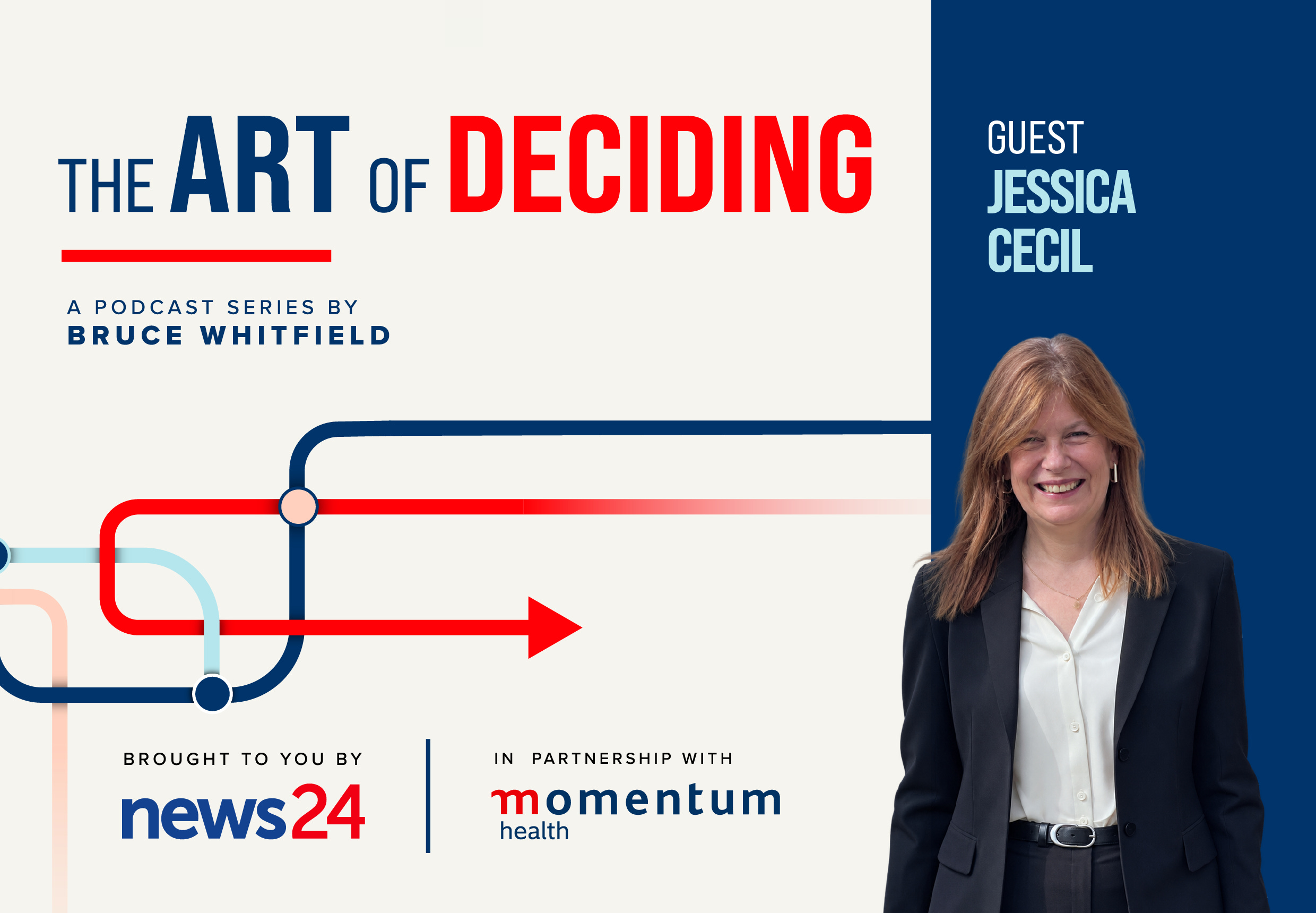
Jessica Cecil joined award-winning business broadcaster Bruce Whitfield on The Art of Deciding to discuss manufactured narratives, the importance of trusted institutions, and why switching off from the news isn’t the answer.
Listen to it anywhere you get your podcasts, or here.

News: What changed this week
AI smear videos target Taiwan’s elections. BBC Verify uncovered a China-linked network that published more than 500 fabricated videos targeting Taiwan’s ruling party over the past year. The material includes false claims that President Lai Ching-te would flee during a war and deepfakes depicting a mayoral candidate taking drugs. Ahead of Saturday’s local elections, the campaign illustrates how AI can be used to attack politicians’ credibility through suspicion and ridicule.
Read BBC Verify’s investigation
Britain’s information defences need a faster route to action. Pro-European advocacy group Alliance4Europe’s new policy paper argues that the National Centre for Information Defence should measure success by how quickly hostile operations are disrupted. It calls for an early-warning network connecting government, businesses and researchers, closer European partnerships, and live threat intelligence for AI developers.
Read Alliance4Europe’s recommendations
Britain backs virtual battlefields for defence AI. Two UK government funds (the Sovereign AI Fund and the National Security Strategic Investment Fund) have joined a $70 million investment round in Agon, a British startup building simulated environments to train and test autonomous defence systems. The aim is to expose AI to realistic threats before deployment, reducing reliance on expensive physical testing. Could this technology help defenders rehearse information attacks? That’s an avenue to explore.
Read the government announcement
Solutions:
Council for Countering Online Disinformation (CCOD), founded by Thomas Barton, combines policy work with practical support for businesses. It brings researchers, companies and policymakers together to develop stronger national defences.
Vantix Partners, co-founded by Peter Munford, helps businesses rehearse and prepare for the attacks they hope never to face. Its disinformation exercises take teams through a hostile campaign from the attacker’s perspective: how it’s planted and how it spreads. The aim is to help companies recognise an operation, decide which narratives matter enough to defend and prepare their people to act.
Alethea, which Munford mentions, uses AI and analyst-curated intelligence to detect emerging narratives and coordinated influence campaigns. Its recently launched Artemis for Communications platform helps users assess who is spreading a story and whether it’s gaining momentum.